
Heat
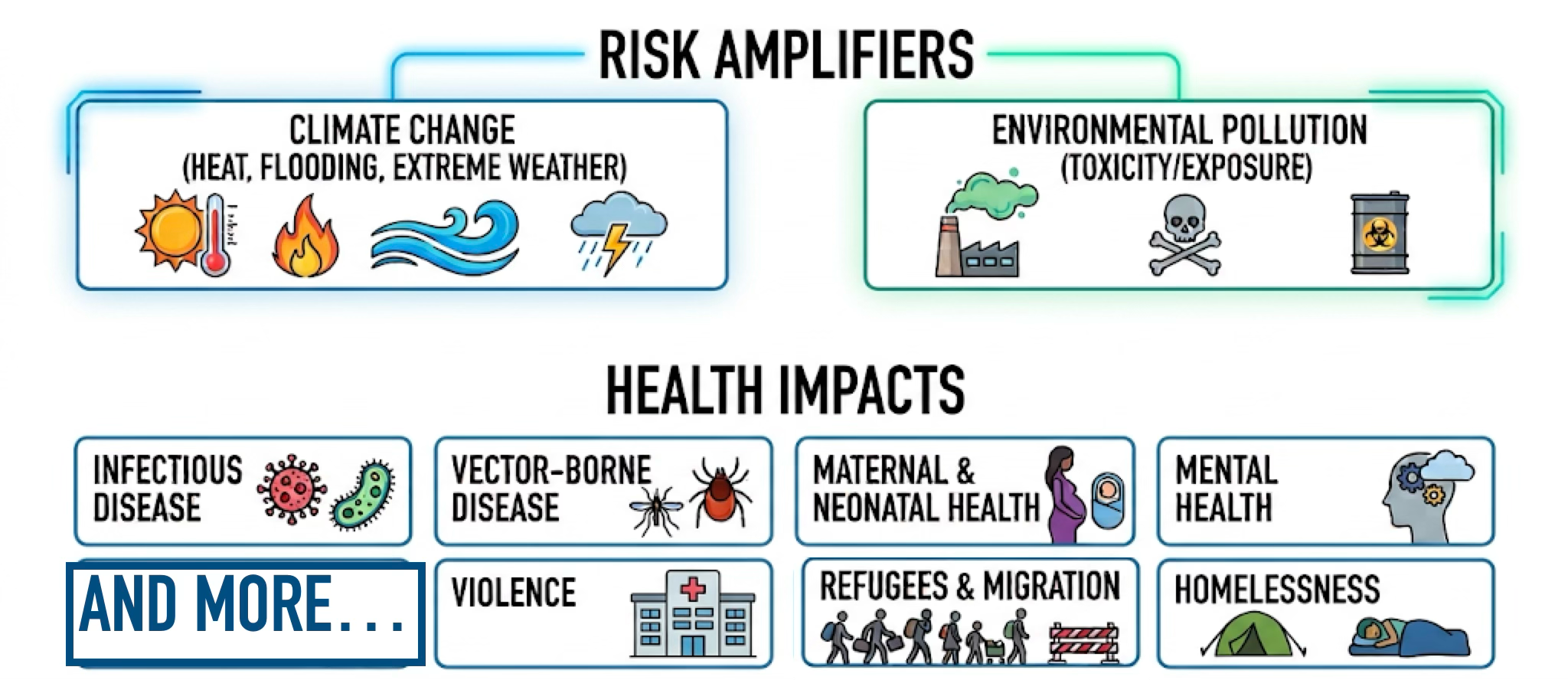
Heat is the deadliest climate-driven health risk—impacting infrastructure, ecosystems, and people, especially vulnerable Houstonians. Houston’s rising temperatures, storm-driven power failures, and limited AC access have created cascading health crises including heat stroke, respiratory illness, cardiac events, mental health, and opioid-related deaths. Heat is central to climate’s health effects and demands an all-hands-on-deck interdisciplinary response-linking climate science, public health, engineering, communication, and the social sciences.
Infectious Disease
The climate-health threat that affects nearly everyone regardless of where they live is emerging infectious diseases (EID). Caused by pathogenic microbes, they are historically estimated to have killed more people than any other single cause of death. Today, 25% of all deaths are from infectious diseases. As the Earth’s climate changes, so do its deadly pathogens. Increases in heat drive pathogen expansion into new areas, habitat destruction promotes zoonotic emergence (bats/coronaviruses) and evolution to new hosts (humans), flooding brings contamination, and climate-driven human crowding/migration create an incubator for rapid transmission. Climate change makes an already dangerous infectious disease problem much worse.
Despite the risk to human health, there is no surveillance for the more than 1,000 deadly pathogens that can infect us (the “pathome”). This gap leaves communities vulnerable to outbreaks, epidemics, and future pandemics. FORECAST will also spearhead new interventions for mosquito-borne diseases affected by heat including geo-smart guided testing, mosquito control, and wastewater surveillance for Dengue, West Nile, and Zika.
Waste, Toxicity, Microplastics
CCEH is committed to measuring air, water, soil, and food quality through an environmental justice lens. We intend to use our campus and the surrounding environment as a Living Lab for environmental toxicology. Activities from field sampling protocols to the laboratory will show students what is required to monitor environmental contaminants from start to finish – and what is needed to share that information with the public. They will produce their own datasets, publish their records, and fill in much-needed gaps where government organizations such as the EPA or Texas Commission on Environmental Quality are simply short-staffed or under-resourced.